
What it treats
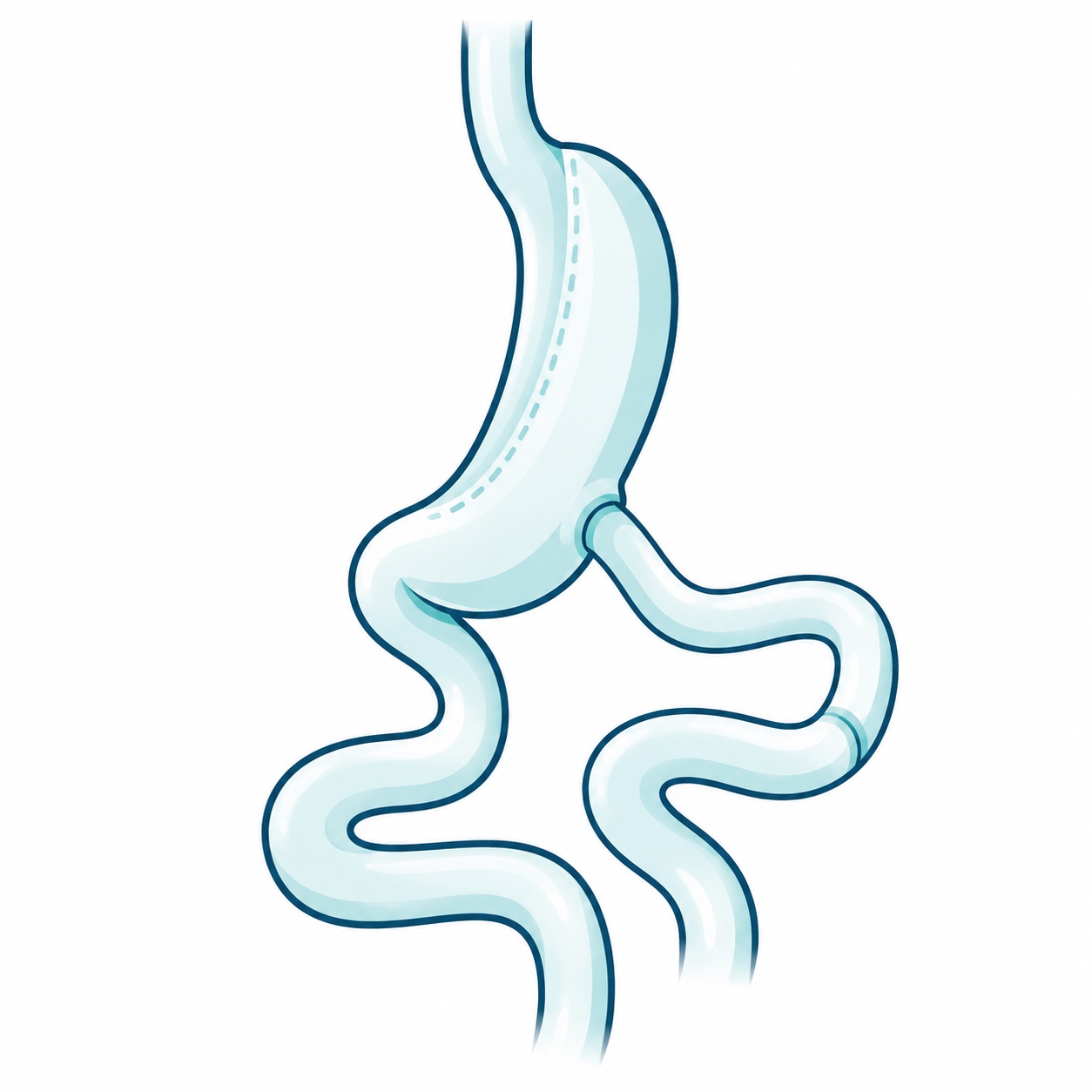
It is studied as a metabolic option for selected people with obesity and associated conditions. Some food follows the usual digestive route and some passes through a connection to the distal intestine.
Reasons for an assessment
Assessment considers associated conditions, previous treatments, reflux and health goals rather than an isolated symptom. Following previous bariatric surgery, the response and any digestive concerns are reviewed.
Tests and diagnosis
Medical history, metabolic and nutritional blood tests, dietary assessment and digestive tests when indicated are needed. The operative report is reviewed after previous surgery.
Treatment options
It is compared with sleeve, bypass, SADI-S and nonsurgical treatments. Comparative and long-term evidence for SASI is more limited than for established procedures, so uncertainties are discussed before deciding.
How it is performed
SASI usually creates a sleeve and an anastomosis between the stomach and ileum, leaving two possible routes for food. Intestinal bipartition describes a group of variations; they do not all use the same connection. It can be performed laparoscopically.
Recovery, follow-up and risks
Diet advances in stages, with monitoring of protein, vitamins, minerals and digestive symptoms. Risks include leaks, bleeding, bile reflux, bowel changes and nutritional deficiencies. Long-term outcomes remain under study.
Frequently asked questions
Is SASI the same as SADI-S?
No. In SASI, the new connection starts at the stomach and a natural route remains for some food; in SADI-S the intestinal connection is made after the stomach, at the duodenum.
This is general information and does not replace a medical assessment. Clinical information source.
Let's discuss your case
Let's review your medical history and tests to guide the next step.
Request an assessment